
Joshua Tree has gone from quiet high-desert outpost to one of the most recognizable short-term rental markets in the country. The pandemic-era gold rush is over, though. Supply is up, the easy money has mostly been competed away, and the county has tightened its rules. That doesn't make Joshua Tree a bad place to buy. It just means the days of buying almost anything and watching it print money are behind us. The properties that do well now are the ones somebody chose carefully.
If you're thinking about buying out here, this is what's worth a hard look before you make an offer.
1. Make sure the property can actually be a short-term rental
This is the most important box to check, and it catches more buyers than anything else. The reason is that "near Joshua Tree" can mean several different jurisdictions, and each one has its own rules.
- Unincorporated areas (the community of Joshua Tree itself, Landers, Wonder Valley, much of the surrounding desert) fall under San Bernardino County's short-term rental ordinance (County Code Chapter 84.28). The county requires an STR permit, an exterior inspection, an operational plan, and notice to surrounding property owners before it issues one.
- Yucca Valley is an incorporated town with its own code, and it has capped STRs at roughly 10% of its housing stock. In some neighborhoods that means no new permits are available at all.
- Twentynine Palms is also incorporated and sets its own rules.
Before anything else, confirm which jurisdiction the parcel sits in, and confirm that a permit is actually obtainable. The bigger concern isn't individual parcels but the overall caps that both the county and the towns have put in place:
- County-wide cap. San Bernardino County has a hard limit on the total number of STR permits it will issue in the mountain and desert region. When that cap is full, no new permits are issued regardless of how well-suited your property is. Permits run approximately $500–$700 annually. Check with San Bernardino County Land Use Services on current availability and fees before you get too far into a deal.
- Yucca Valley's cap. The town has capped STRs at roughly 10% of its total housing stock. Depending on where things stand when you're buying, permits in certain neighborhoods may simply be unavailable. Check with Yucca Valley Community Development directly.
- The public permit map. The county keeps an interactive map of all permitted STRs. It's a useful tool for understanding how saturated a given area already is.
Regulations here change often, so don't rely on a blog post (this one included) for the current specifics. Call the relevant agency directly and get the present-day answer in writing before you're in escrow. The worst outcome in this market is buying a home on the assumption that you can rent it short-term and then finding out you can't. Enforcement is active, and fines can run to four figures per day for unpermitted operation.
2. Location within the region
Once you've confirmed that a property can be an STR, location drives almost everything about how it performs.
- Proximity to the National Park. Being close to the West Entrance (through the town of Joshua Tree) or the North Entrance (Twentynine Palms) draws guests. It isn't the only thing that matters, but it helps.
- Views and privacy. Guests pay more for unobstructed desert views, boulder-strewn lots, and the feeling of being alone in the landscape. A house boxed in by neighbors ends up competing on price. A house with a horizon competes on experience instead.
- Acreage. More land buys privacy, protects your views, and depending on the parcel may allow a second permitted unit. It also affects which permit rules apply.
- Road access. Plenty of desert lots sit on unpaved or poorly maintained dirt roads. Some guests love that and some won't book it, and it affects winter access, whether a rental car can make it in, and your own maintenance trips. Drive the access road yourself before you buy.
- Dark skies. Stargazing is one of the biggest draws out here. A property near a light-polluted commercial strip gives up one of its best selling points.
How the sub-areas stack up
Not all of the Morongo Basin performs equally. Here's how the main neighborhoods rank from a guest demand and revenue standpoint, drawing on market data and our own portfolio experience across all of them:
-
Pioneertown — The premium market. Proximity to Pappy & Harriet's, the creative community, and a genuinely iconic identity among guests drives the highest ADRs in the region. Supply is limited and the character of the area is hard to replicate. Top properties here consistently outperform the broader market.
-
North Joshua Tree / Joshua Tree Village — The core market and the largest by volume, with the strongest brand recognition and easiest access to the West Entrance. Top neighborhoods here are among the strongest for STR performance across the broader area. Well-designed homes close to the park entrance perform very well; generic ones face stiff competition.
-
Gamma Gulch — One of the most sought-after pockets in the Joshua Tree area, known for dramatic boulder landscapes, privacy, and dark skies. Relatively few homes come available and the setting does a lot of the marketing work for you.
-
Monument Manor — A quieter residential pocket that benefits from proximity to the park without the density of the village. Properties here tend to attract guests who want seclusion over walkability.
-
Sky Harbor — Elevated desert setting with strong views and a less saturated inventory than Joshua Tree proper. Can punch above its weight for the right property.
-
Yucca Mesa — A large, somewhat spread-out area in the Yucca Valley jurisdiction. Performance varies significantly by specific location, but the better-positioned properties benefit from Yucca Valley's strong overall market. Yucca Valley as a whole averages around $52K in annual revenue at a $340 ADR and 44% occupancy, with supply growing fast — up 36% year over year.
-
Yucca Valley (town) — Established market with a real supply base. The permit cap at 10% of housing stock means availability varies by neighborhood. Solid fundamentals but not as distinctive as the areas above from a guest perception standpoint.
-
Landers — A wide-open high-desert area with serious sky and serious acreage potential, and home to Integratron, which draws a dedicated subset of guests. Median ADRs run around $198/night, lower than Joshua Tree proper, but properties with a strong identity and outdoor amenities can outperform. Lower land prices can make the numbers work on the right deal.
-
Morongo Valley — The western gateway to the basin, closer to the 10 freeway than the park. Occupancy runs around 55% with ADRs averaging $285, which is respectable, but the location lacks the desert mystique of the areas further east.
-
Twentynine Palms — The most affordable entry point but also the lowest performer on ADR. The market averages around $35K in annual revenue at a $259 nightly rate and 41% occupancy. Proximity to the North Entrance and the Marine Corps base provides a consistent demand floor, but the guest profile skews toward budget travelers rather than the design-forward crowd that drives premium rates elsewhere.
A few of these (Gamma Gulch, Monument Manor, Sky Harbor) aren't tracked separately by the major analytics platforms, so the rankings above for those draw on what we see in our own portfolio rather than published third-party data. The broader lesson across all of them is that location sets a floor, not a ceiling — the right property in a middle-tier area still beats a mediocre property in a top-tier one.
None of this is abstract. It's what guests actually reward in their reviews. The privacy and the night sky tend to land together:
"A beautiful home, comfortable and clean. Private and secluded location made for quiet nights and beautiful stargazing."
Courtney, reviewing Black Desert House (Airbnb)
And a dirt-road approach, which is worth flagging during your search, often reads to the right guest as part of the charm rather than a problem:
"Great location, comfortable linens, dirt roads, coyotes, pour over style drip machine, grill that works in the desert wind, pool... I'll be back as often as I can get away."
Sarah, reviewing Casa Descanso (Airbnb)
3. The land and its systems
Desert properties come with due-diligence items that buyers from coastal or urban markets often don't think to check, and a few of them can turn into expensive surprises.
- Water. Is the property on a community water system or a private well? With a well, you own the pump, the maintenance, and the risk if the water table drops or the quality changes. Confirm water availability and quality in writing.
- Septic. Most properties out here run on septic rather than sewer. Get the system inspected and understand its capacity, since occupancy limits and septic capacity are tied together.
- Power and connectivity. Confirm there's utility power, since some remote parcels are off-grid or run on solar, and check internet and cell service. Reliable Wi-Fi is non-negotiable for the remote workers and creative professionals this market attracts.
- Flood and wash zones. Desert flash flooding does serious damage. Check whether the parcel sits in or near a wash, and what that means for insurance and erosion.
- Climate stress on the building. Intense sun, heat, wind, and blowing dust wear hard on roofs, HVAC, paint, and exterior finishes. Leave room in your budget for it.
Connectivity in particular is easy to underrate, and guests notice when it's handled well:
"...perfect for hikes, vibes, and even remote work!! wifi was great."
Luke, reviewing Sunset Heights (Airbnb)
4. The house and the design
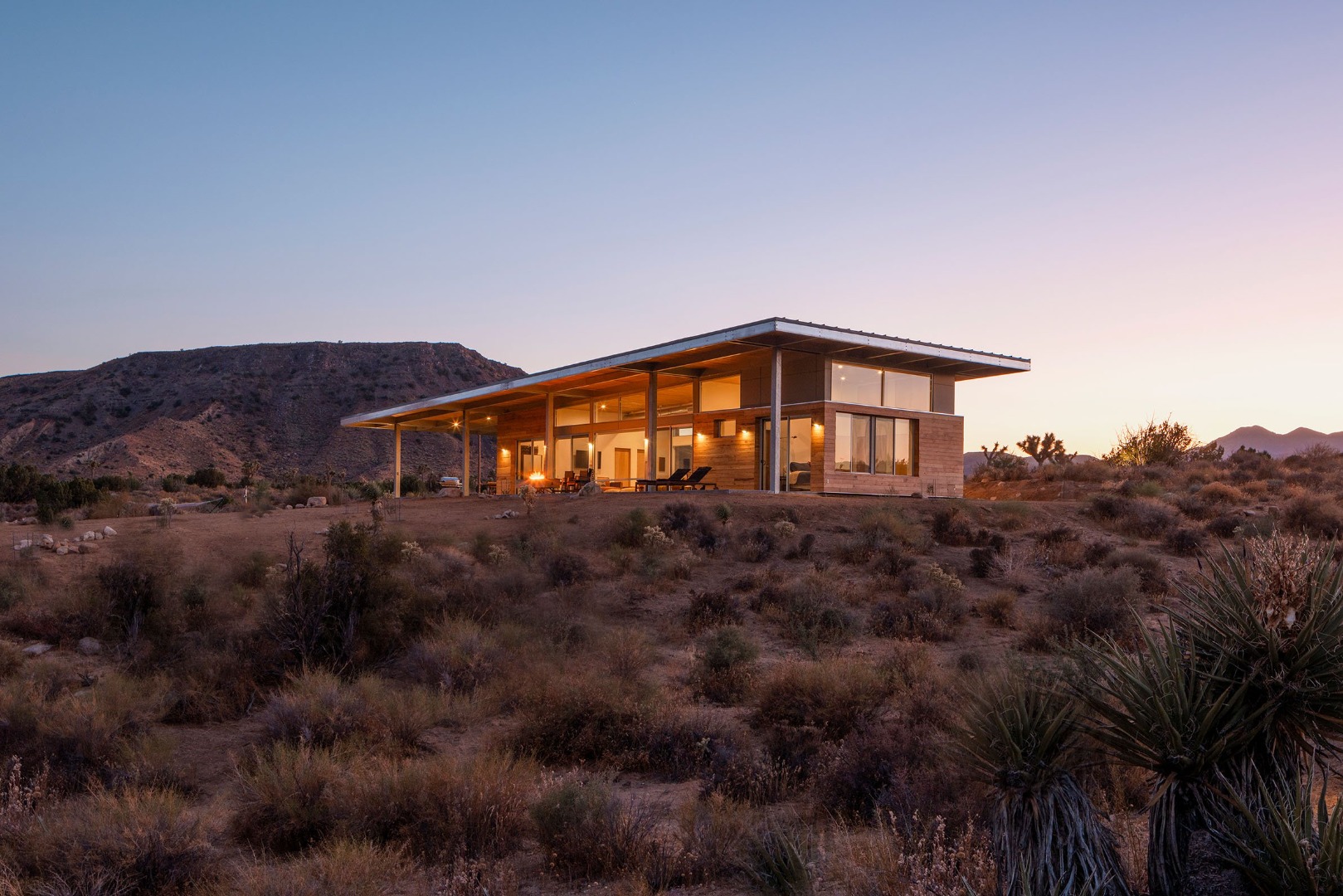
Joshua Tree is, to an unusual degree, a design-driven market. Plenty of guests aren't only booking a place to sleep near the park. They're booking the look and the experience of the house itself. Modernist and architectural homes, well-done bohemian retreats, and anything with a strong point of view tend to outperform generic stucco boxes.
When you walk a property, look at it the way a guest scrolling listings would.
- Does it photograph well? The first impression is a thumbnail, so light, sightlines, and a distinctive look matter a great deal.
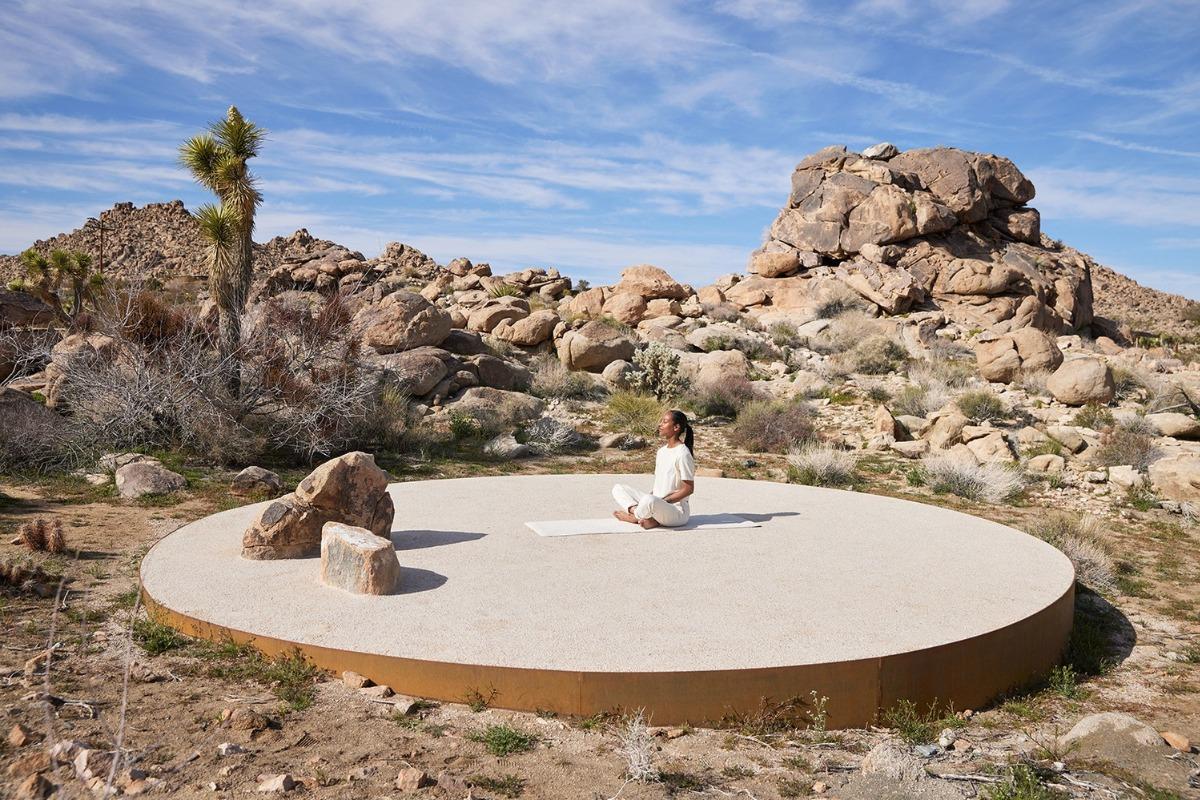
- Experience amenities. Hot tubs, pools (along with the cost and liability they bring), outdoor showers, fire pits, hammocks, dedicated stargazing spots, and shaded outdoor living all drive bookings and nightly rate.
- Condition versus renovation. A dated house at the right price can be a great buy if you've honestly budgeted the renovation and styling it needs to compete. A house that's already beautifully done costs more up front but earns from day one. Decide which of those you're signing up for before you make an offer.
- Bedroom count and layout. Occupancy limits track bedroom count and unit size, which sets a ceiling on your nightly rate. Work out how the layout maps to permitted occupancy.
- Know your competition. Before you fall for a house, spend time on the booking platforms looking at comparable listings in the same area with similar bedroom counts and amenities. How many are there? How do they look? What are they charging and how booked up do they appear? The goal is to find something that stands out rather than blends in. If a dozen similar houses are already in a half-mile radius, you'll be fighting on price from day one. If yours has something most of them don't, a better view, a pool, a distinctive design, more land, you have room to compete on experience instead.
When the design is right, it shows up in the reviews. Guests tend to lead with the look of the place:
"Simple but perfect. Impeccable design and architecture. Clean and modern, peaceful and serene!"
Amanda, reviewing The Landing House (Airbnb)
And the experience amenities, the hot tub and the sunset and the stars, are what guests remember afterward:
"Magical location just outside Joshua Tree. Incredible sunset and stargazing from the hot tub."
Caroline, reviewing Shelter 1 (Airbnb)
5. Run the numbers for a mature market
The most common mistake right now is underwriting a Joshua Tree purchase on 2021 assumptions. Supply has grown and the market is more competitive than it was at the peak, so build your projections on current, conservative data.
- Realistic occupancy and ADR. Pull comparable listings that are operating right now rather than aspirational ones, and look at nights actually booked rather than advertised rates. Account for the better-photographed, better-managed competition you'll be up against.
- Seasonality. Spring and fall are the strong seasons. Summer heat suppresses demand, so you'll either discount heavily or sit empty through the hottest months. Model the slow season honestly.
- Desert-specific operating costs. Pool and hot tub service, HVAC wear, dust-driven cleaning, landscaping, well and septic maintenance, and heavier summer utility loads all add up.
- Taxes and fees. Plan for the Transient Occupancy Tax, around 7% in the county, plus any tourism or business-improvement-district fee on top. Confirm the current combined rate and your remittance obligations, because the host is ultimately responsible even when a platform collects.
- Management, insurance, and permit costs. Whether you self-manage or hire out, the annual permit (approximately $500–$700), proper STR insurance, and management all belong in the model.
One more thing worth flagging on the revenue side: if a seller or agent mentions photo shoots and video productions as a meaningful income stream, treat that with real skepticism. It used to be a thing out here, particularly for architectural and design-forward homes that attract production companies. It isn't anymore. San Bernardino County's STR ordinance (84.28.030) explicitly prohibits using a short-term rental for commercial activities, and that list includes filming and photography shoots. Any buyer who underwrites a deal expecting that revenue is in for a rude surprise, and any operator running those bookings is already out of compliance.
One thing that helps the math is repeat demand. A property people want to come back to spends less time chasing new bookings:
"This place is amazing! We hope to be back! Scenic, stylish, and modern with a unique flair."
Laeo, reviewing Ozzie and Harriet's (Airbnb)
Reach out to us for a projection on a property you are looking at purchasing.
6. The operational reality
San Bernardino County requires a 24/7 local contact who can respond to complaints quickly, which is a polite way of saying you can't run a desert STR from far away with no plan. The county takes noise complaints, neighbor relations, and quiet hours seriously, and repeated violations can put your permit at risk. Before you buy, work out who's answering the phone at 11 p.m. and how a guest gets a same-day fix when the AC dies in July. If you don't live nearby, plan on a professional manager. It's as much about staying compliant as it is about guest service.
When it's done well, guests feel it, and it shows up in the reviews:
"Place was exactly as described. Homestead Modern was very responsive to any questions we had."
Jeff, reviewing Hidden Valley Cottage (Airbnb)
A pre-offer checklist
Before you write an offer, you should be able to answer:
- [ ] Which jurisdiction is this parcel in, and can you get an STR permit for it today?
- [ ] Has the parcel hit its per-parcel permit cap? Would it count against your per-owner cap?
- [ ] What's the permitted occupancy, and how does that cap your rate?
- [ ] Have you confirmed the water source, septic condition, power, and internet?
- [ ] Is the parcel in or near a wash or flood-prone area?
- [ ] How does the property photograph, and what will it cost to make it competitive?
- [ ] Do conservative, current-market projections still pencil out after taxes, fees, and desert operating costs?
- [ ] Who's handling 24/7 guest and complaint response?
Joshua Tree is still a special place to own, and demand for a real high-desert experience isn't going anywhere. The market just rewards a careful buyer more than an opportunistic one now. Confirm the property can legally do what you need, build your numbers on honest assumptions, and pick something a guest has a real reason to choose over the place next door. That's the part of the market still doing well.
Regulations and tax rates referenced here change frequently. Always confirm current requirements directly with San Bernardino County Land Use Services or the relevant town before you buy.